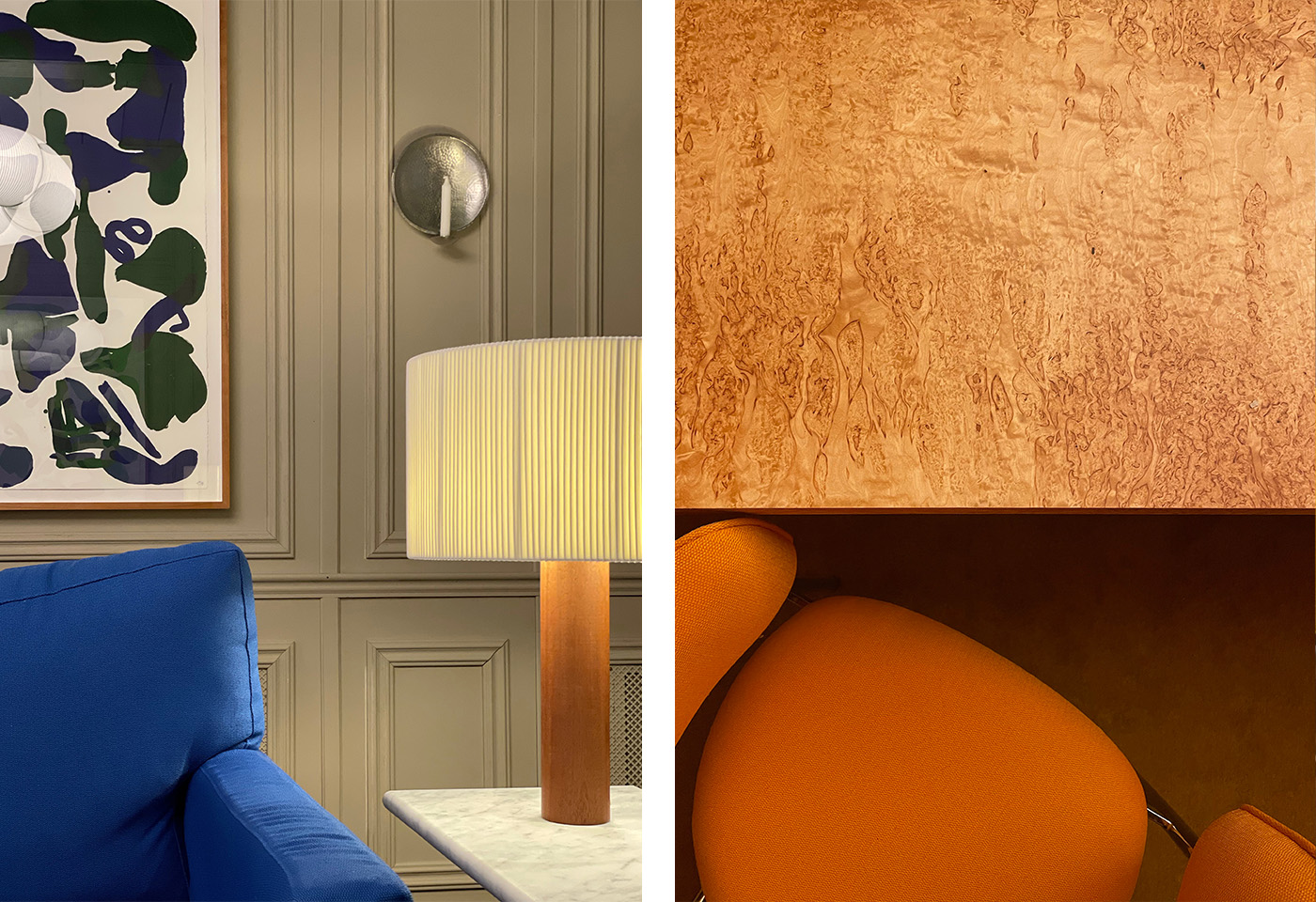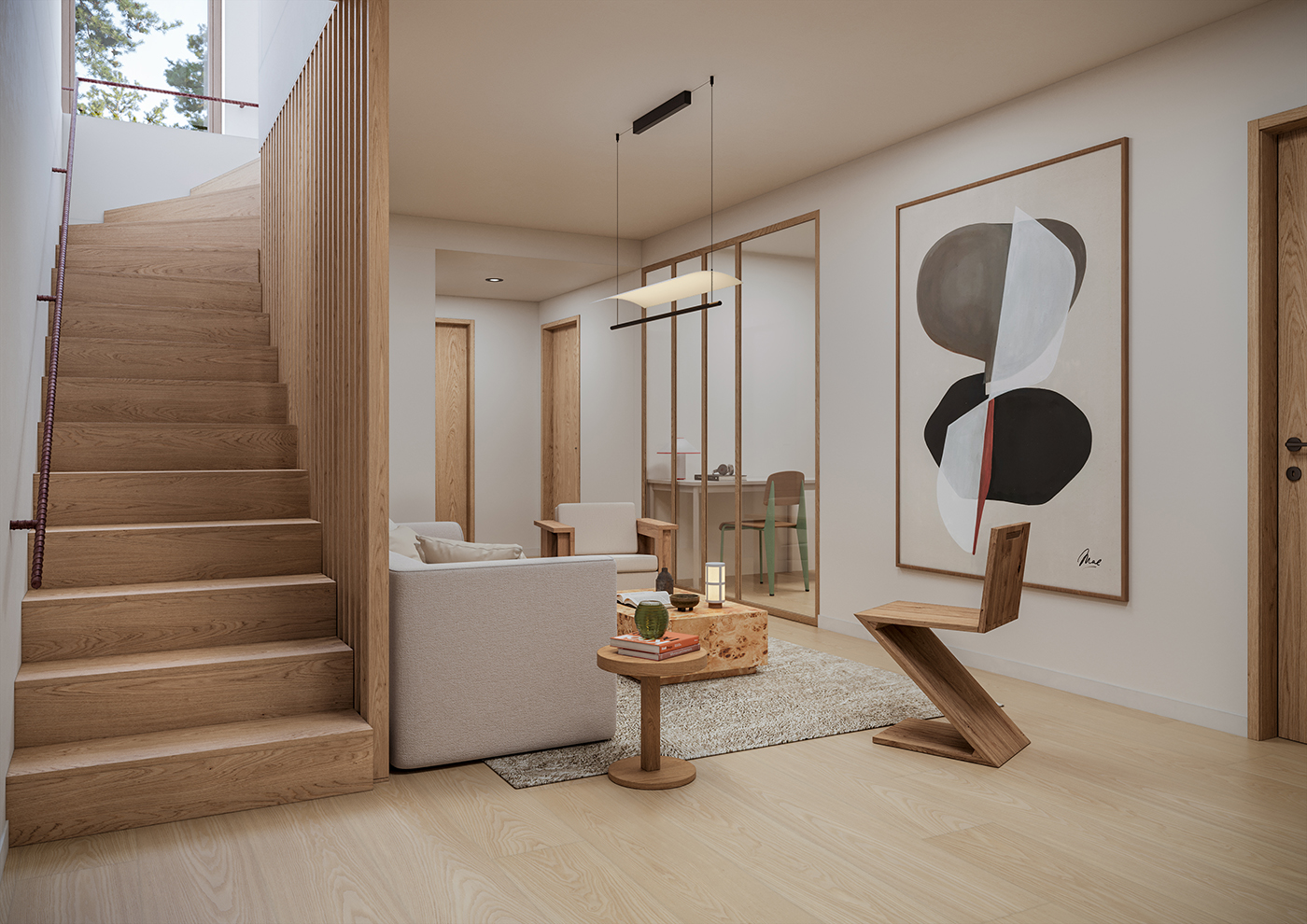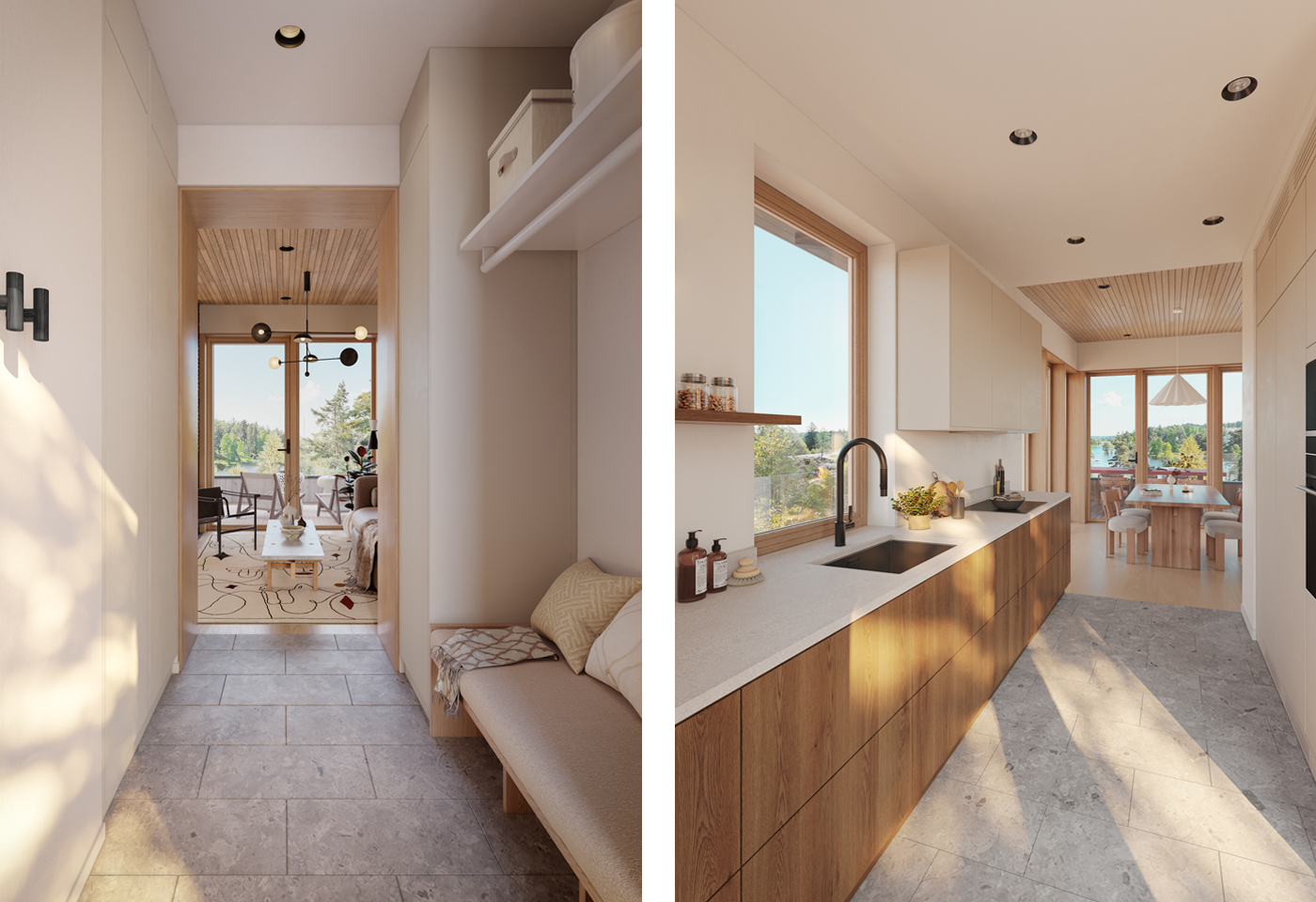
Atmosphere is the word we use when a room is right and we cannot immediately say why. It is not a colour, not a mood board, not a lamp. It is a coherence — of proportion, of light, of material, of temperature — sustained across every decision the room contains. When it is present, you feel it before you name it. When it is absent, nothing else about the room quite recovers.
The mistake is to look for atmosphere in the last ten percent of the project. In the accent chair, the pendant, the styling for the photograph. Atmosphere is decided much earlier than that. It is decided the first time the ceiling height is set, the first time the window is proportioned against the wall, the first time the plaster tone is chosen against the floor. By the time the accent chair is selected, the atmosphere of the room has already been written; the chair either belongs to it or breaks it.
“Every decision made in the same key as the last. Anything that would break the chord, removed.”
This is why we resist the language of ‘concept'. A concept is a headline; a room is a chord. The projects we most admire — Van Duysen's houses, Studio KO's hotels, Sigurd Lewerentz's chapels — are not held together by a concept. They are held together by an unbroken tone of voice, applied to every hinge, every threshold, every reveal. You could not lift one detail out of them and drop it into another project without noticing.
Practically, what this means for us is that we make a great many small decisions ourselves that other studios would delegate. The exact profile of a skirting. The specific warm-white of the downlight. The width of the shadow gap between a stone floor and a plaster wall. None of these decisions is expensive. All of them are load-bearing. Any one of them, made in the wrong key, will quietly detune the room.
It also means that we tend to under-populate rooms rather than over-populate them. Fewer objects, more precisely placed. A single, well-proportioned bench along a wall rather than a suite of furniture. A single low pendant over a table rather than a track of spots. Atmosphere is easier to protect in a room that has been asked to hold less.
And it means we are patient with the last week of a project — the week when the client, understandably, wants to fill the rooms and put life into them. Our job at that point is not to add. It is to hold the tone we have spent months tuning, and to trust that the life the client brings will be more than enough.
Atmosphere, in the end, is the only measure of a room that matters. Everything else — the brief, the budget, the materials, the plan — is an argument for it.