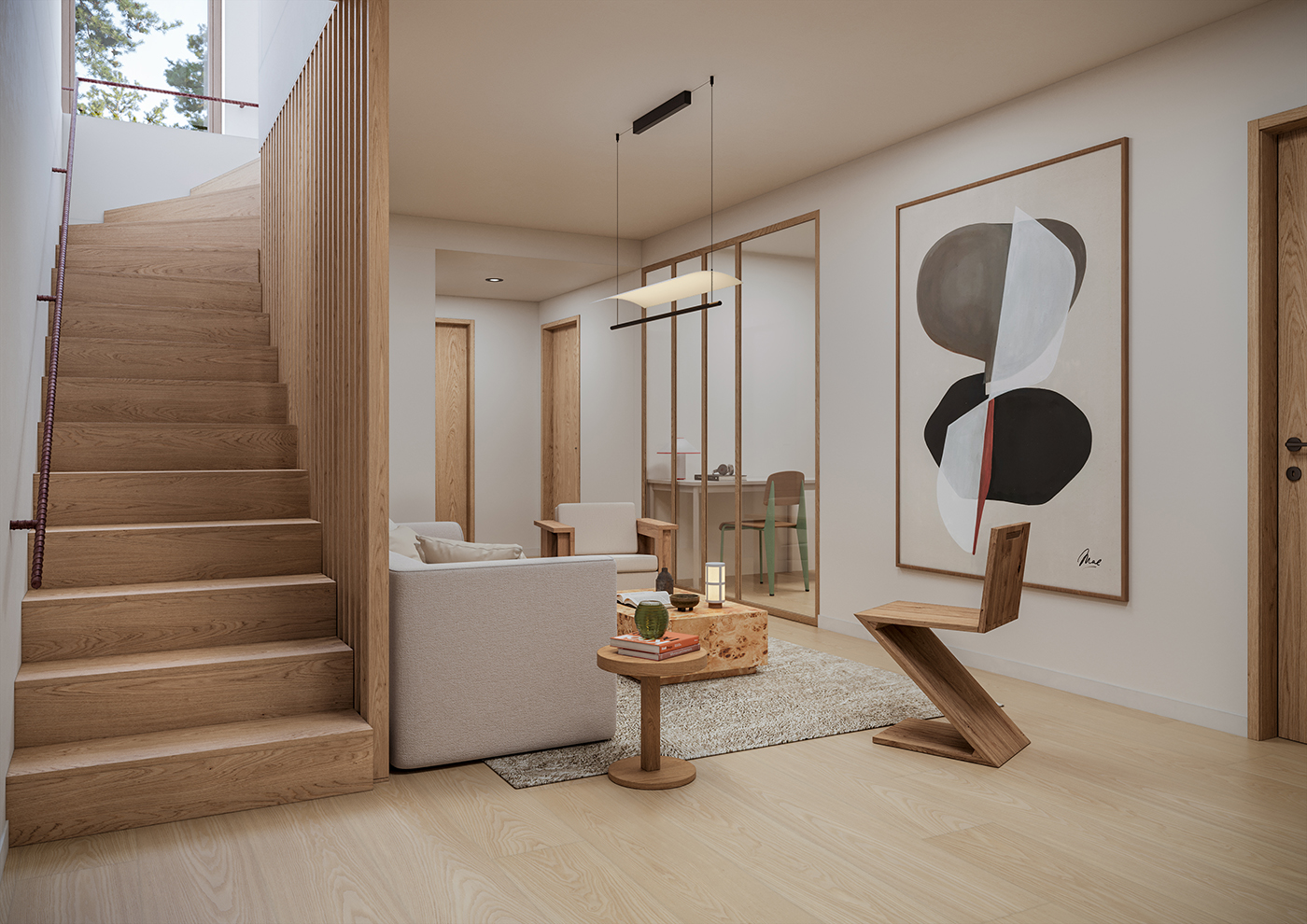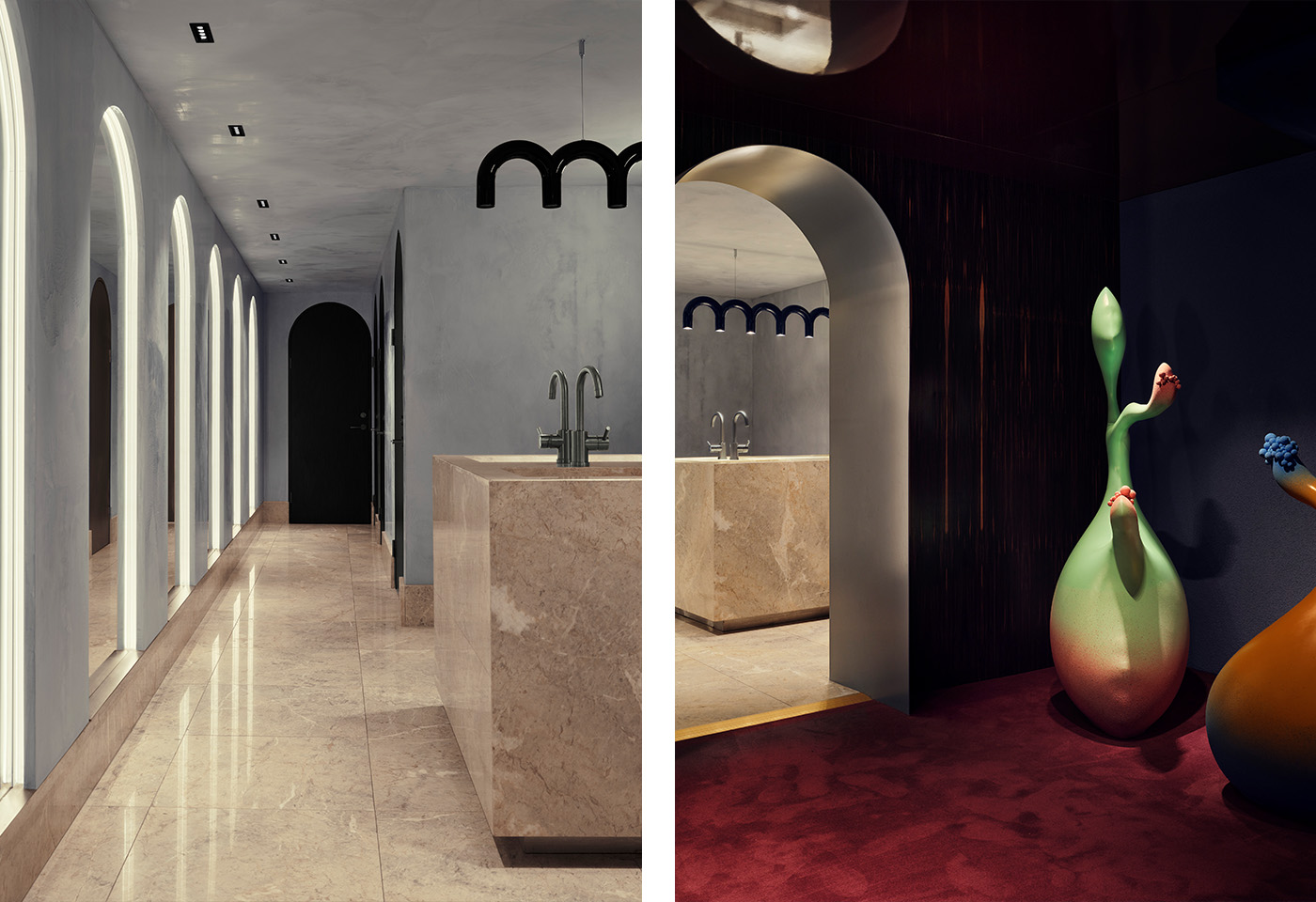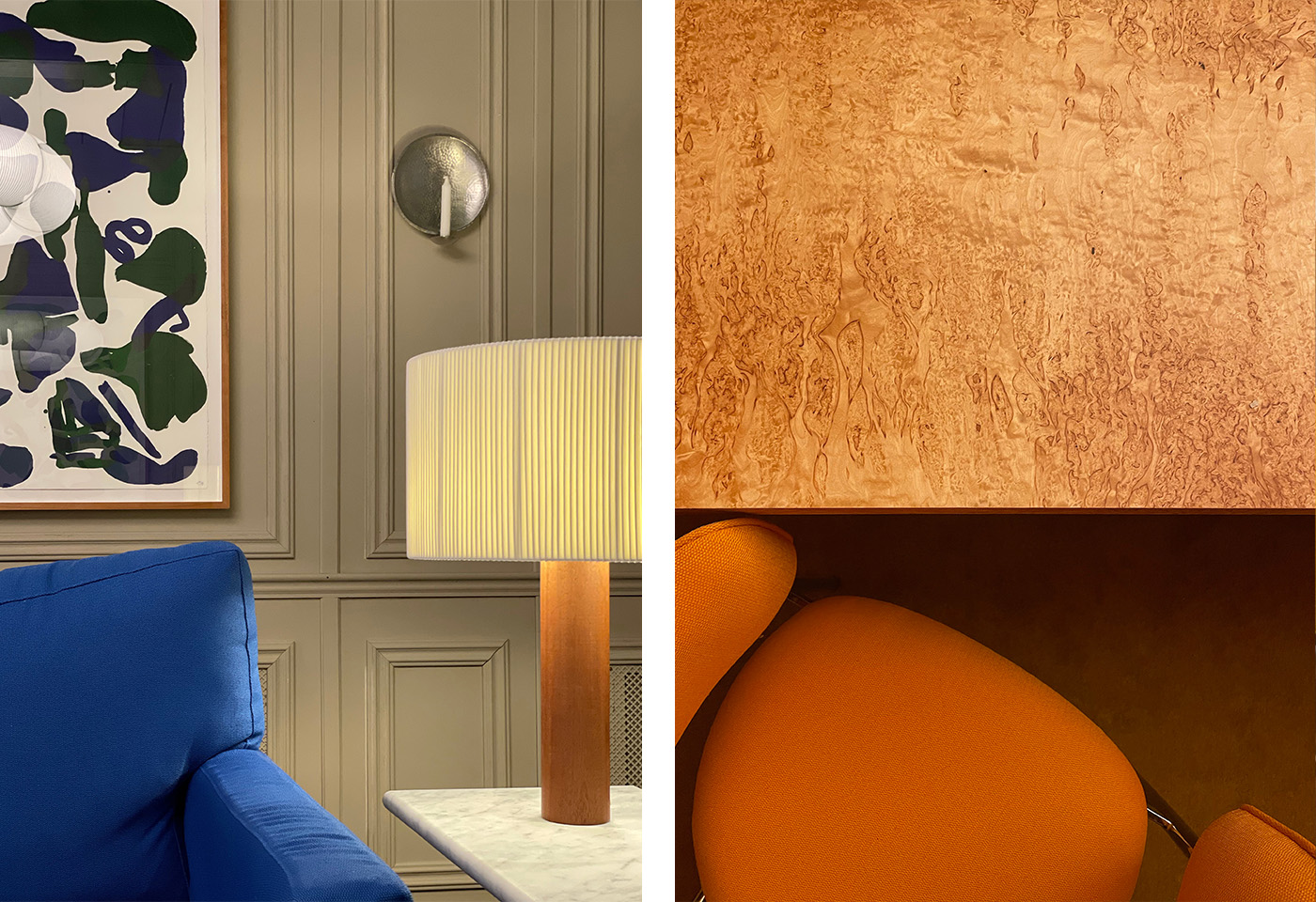
Long before we specify a stone or draw a joint, we sit in the room and watch the light. What hour does the sun cross the floor. Where does the shadow gather. Which walls hold warmth into the evening. These are the first questions, and the honest ones — the ones that decide, quietly, what the project will eventually be.
There is a habit in contemporary architecture of treating light as a finish: the last thing considered, added at the end through a lamp catalogue or a rendering. We work the other way around. Light is the first material we specify, and every other material — the oak, the plaster, the stone, the linen — is then chosen for how it behaves in it.
“A room designed only for the photograph is a room designed for noon.”
But most of life happens in the softer hours. The pale grey of a Stockholm morning in November. The long amber quarter-hour before dinner in July. The low candle at the end of a meal, when the room belongs entirely to the people still in it. If the architecture does not hold those hours, no material can save it — and no photograph, however flattering, will make up for a room that fails at seven in the evening.
Our preference is for surfaces that meet light generously. Lime plaster over paint. Unpolished stone over glaze. Oak that has been oiled and left, not lacquered and sealed. Linen that softens against the wall rather than hanging in a plane. These materials return light in the same key it arrives — quietly, and without correction. They also age with the light, keeping a private record of the years the room has been inhabited.
The corollary is a certain restraint with electric light. We tend to specify fewer fixtures than we are asked for, at lower levels than we are asked for, and almost always warmer. A room lit for the last hour of the evening is a room that has been designed for company, and it will forgive most other decisions. A room lit for the middle of the office day rarely does.
None of this is a style. It is closer to a discipline — a way of beginning each project by sitting still in the empty room and letting the light describe what the architecture is actually being asked to do.